Artist profile
Robert Indiana
1928 - 2018
Robert Indiana (1928–2018)
Robert Indiana was one of the most celebrated American artists associated with the Pop Art movement, renowned for his bold use of words, numbers and symbols to explore themes of love, identity and American life.
Born Robert Clark in New Castle, Indiana, in 1928, he studied at the Art Institute of Chicago before moving to New York in 1954. There, he became part of a generation of artists transforming the visual language of contemporary art. Drawing inspiration from commercial signs, advertising, roadside graphics and American vernacular culture, Indiana developed an unmistakable style combining precise geometric forms with striking typography and vivid colour.
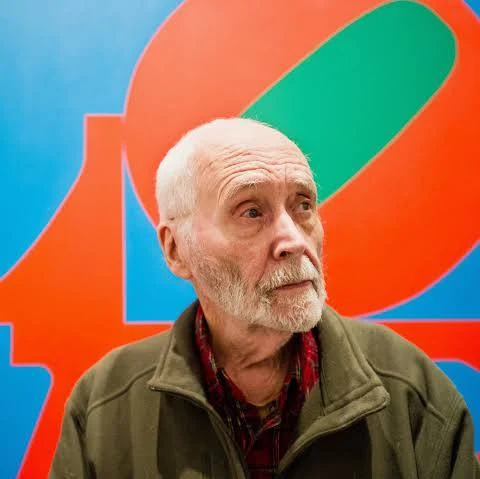
Words became central to Indiana's art. Short, emotionally charged terms such as LOVE, EAT, DIE and HOPE were transformed into powerful visual statements, blurring the boundaries between language and image. His iconic LOVE composition, with its four letters arranged in a square and the tilted “O,” first emerged in the 1960s and became one of the most recognisable images in twentieth-century American art.
In 1968, Barry Cronan Fine Art commissioned Indiana's Love Tapestry 1968. Produced as a hand-knotted tapestry in India, the work was issued in a limited edition of 10 plus artist's proofs.
The tapestry translates Indiana's bold graphic vocabulary into a richly tactile medium. The clarity of the lettering and geometric structure of the LOVE image are given additional texture and physical presence through the hand-knotted surface, creating a distinctive interpretation of one of the defining images of the Pop Art era.
Indiana's work is represented in major museum and private collections internationally. Through his transformation of familiar words and symbols into monumental visual statements, he established a unique place in post-war American art and created imagery that continues to resonate across generations.
Painted Ltd · London